

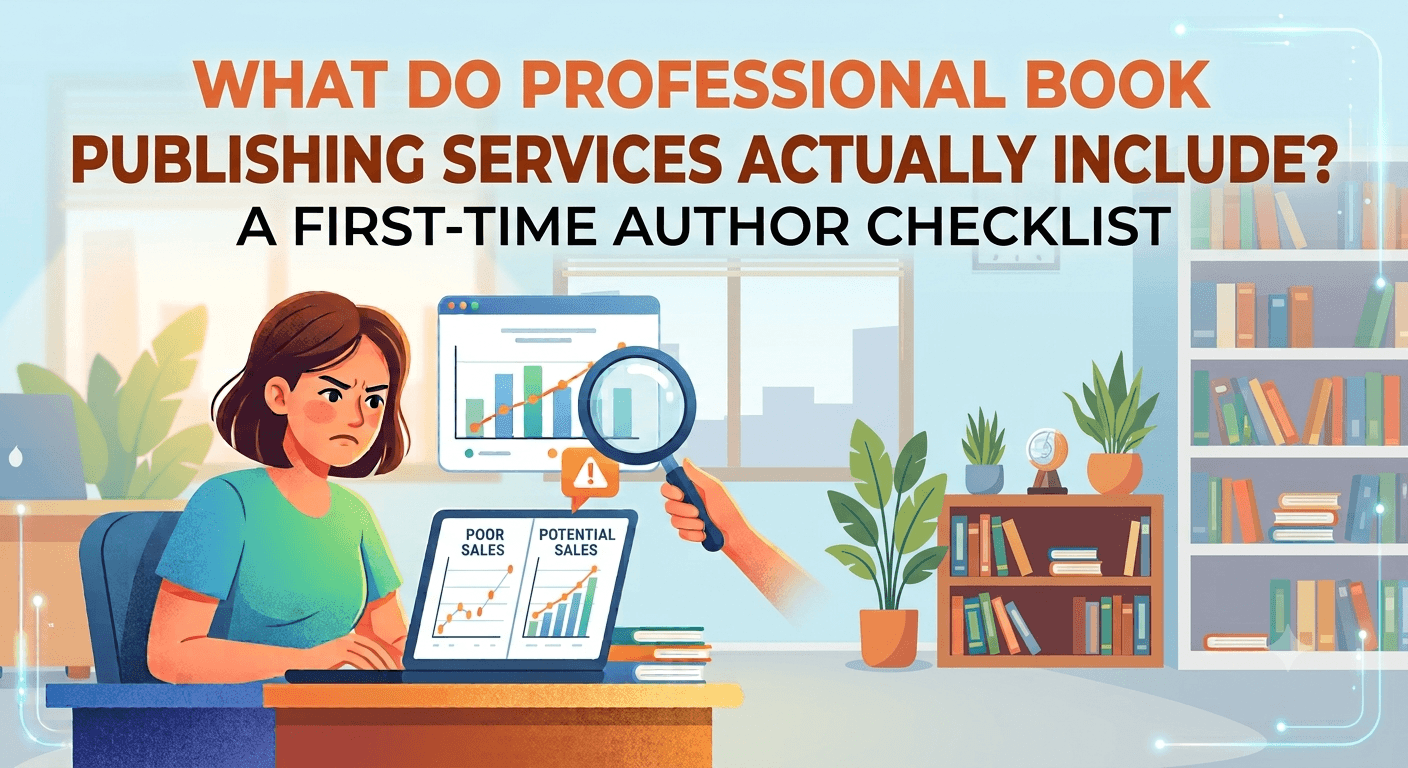
The book is live. The cover is uploaded. The product page exists. Maybe the author even shared the link with friends, posted a few times, and waited for that first wave of sales.
Then nothing much happens.
That quiet silence can sting. Not because the book has no value, but because publishing a book and selling a book are two different jobs. Book Marketing is the bridge between "my book exists" and "the right readers understand why they should care."
Many authors assume the hard part ends when the book goes live. In reality, that is often where the visibility work begins. Readers still need a reason to notice the book, trust it, remember it, and choose it over thousands of other titles.
Peter Drucker famously said, "The aim of marketing is to know and understand the customer so well the product or service fits him and sells itself." That idea fits book promotion perfectly. A book does not sell only because it is available. It sells when the right reader feels, "This is for me."
• A published book may fail to sell because the reader journey is unclear, not because the book is bad.
• Book Marketing works best when audience, message, cover, description, reviews, and launch timing support each other.
• Random posting rarely fixes weak positioning.
• Authors should check the full sales path before spending more money on ads.
Book Marketing is the process of helping the right readers discover, understand, trust, and act on a book. It may include author branding, book positioning, publicity, launch planning, online book promotion, advertising, reader outreach, and long-term visibility work.
Good marketing does not force a book on everyone. It makes the book easier to find and easier to say yes to.
That means the work starts before an ad campaign. It starts with questions like:
• Who is this book really for?
• What promise does it make?
• Why should a reader choose it now?
• Does the cover match the genre?
• Does the description create curiosity?
• Does the author look credible enough to trust?
A helpful book marketing service should look at the whole reader path, not just one promotional tactic.
A good book can struggle because readers do not buy quality they cannot see. They respond to signals: cover, title, reviews, description, category, author presence, recommendation, timing, and emotional relevance.
The publishing market is crowded. According to Publishers Weekly reporting on Bowker data, self-published titles with ISBNs rose 7.2% in 2023 and topped 2.6 million titles.
That does not mean new authors cannot succeed. It means "being published" is not enough of a signal anymore.
Readers are busy. They skim. They compare. They judge quickly. If the book's marketing pieces are weak or disconnected, even a strong manuscript can look forgettable.
The problem is often not one big failure. It is usually several small gaps working together.
The fastest way to weaken a book's message is to aim it at "all readers."
A memoir is not for everyone. A business book is not for everyone. A children's book is not for every parent, teacher, or child. Strong author marketing begins with a clear reader profile.
Instead of saying, "This book is for anyone who likes inspiration," a stronger angle might be:
• For Women Rebuilding Confidence After Divorce
• For First-Time Founders Afraid Of Hiring
• For Parents Helping Anxious Children Sleep
• For Fantasy Readers Who Love Morally Complex Heroes
• For Young Readers Who Struggle With Feeling Different
Specific does not shrink the audience. It helps the right people recognize themselves.
Many authors write descriptions like a school report.
They summarize the book. They list what happens. They explain the theme. But they do not create tension, curiosity, or emotional pull.
A strong book description should answer three reader questions:
1. What is this book about?
2. Why should I care?
3. What feeling, answer, or experience will I get?
For fiction, that may mean conflict, stakes, voice, and atmosphere. For nonfiction, it may mean problem, promise, credibility, and practical value.
A description should not tell the whole book. It should make the reader want to open it.
A cover can be attractive and still fail.
That usually happens when it does not match reader expectations. A thriller cover that looks like literary fiction may confuse readers. A business book that looks like a personal journal may feel less authoritative. A children's book cover that lacks warmth or visual charm may miss the parent buyer.
Professional book cover design should balance originality with category recognition.
Readers use covers as shortcuts. They ask, often without realizing it, "Does this look like the kind of book I already enjoy or trust?"
If the answer is unclear, they move on.
Readers often want to know who is speaking to them.
This does not mean every author needs to become a celebrity or post every day. It means the author should have a clear presence somewhere. That could be an author website, a professional bio, a newsletter, a simple media kit, social profiles, podcast appearances, or thought-led content.
Author branding answers:
• Who is the author?
• Why did they write this book?
• What do they care about?
• Why should readers trust them?
A book launch should not begin on publication day.
By then, the book page is live, but the audience may not be ready. A stronger book launch strategy begins weeks or months earlier with audience building, cover reveal planning, early reader outreach, review requests, author content, email preparation, and launch messaging.
Here is a simple launch preparation path:
1. Define the reader and core promise.
2. Prepare the cover, description, author bio, and landing page.
3. Build early interest through useful or story-driven content.
4. Reach out to potential reviewers or early readers.
5. Plan launch-week posts, emails, and outreach.
6. Keep promoting after launch instead of disappearing.
The launch is not one day. It is a runway.
Reviews are not just ego points. They help reduce hesitation.
A reader may like the cover and description but still wonder, "Has anyone else read this?" Even a few honest early reviews can help a book feel less risky.
Authors should never fake reviews or pressure people into dishonest praise. But they can plan ethical review outreach through advance reader copies, newsletter communities, genre groups, book bloggers, professional review options, and reader follow-ups.
Trust signals can also include:
• A Polished Author Bio
• Clear Credentials Where Relevant
• Media Mentions
• Reader Testimonials
• Endorsements
• Professional Editing And Design
• A Clean Book Page
Trust is built before the sale.
Book advertising can help, but ads cannot fix a weak offer.
If the cover is confusing, the description is flat, the category is wrong, or there are no trust signals, paid traffic may only reveal the problem faster.
Before spending on book advertising, authors should check the page first.
| Marketing Gap | What It Looks Like | Better Fix |
|---|---|---|
| Weak audience | "Everyone will enjoy this book" | Define one primary reader group |
| Flat description | Summary without emotion or stakes | Rewrite around promise, tension, or benefit |
| Poor cover fit | Nice design, wrong genre signal | Redesign around reader expectations |
| No trust | No reviews, weak bio, no author presence | Build early reviews and author credibility |
| Late launch | Promotion starts after release | Build a pre-launch runway |
Ads work better when the book page already gives readers enough reasons to care.
Posting "buy my book" repeatedly is not a strategy.
Online book promotion works better when content gives readers a reason to pay attention before asking for a sale. For nonfiction, that may mean useful insights, short lessons, author stories, reader questions, or problem-based posts. For fiction, that may mean character quotes, mood boards, behind-the-scenes notes, themes, tropes, and emotional hooks.
Good promotion creates context. Bad promotion repeats the link. The goal is not to shout louder. The goal is to make the reader feel invited into the world of the book.
Many authors treat marketing like a launch-week event. Then the book goes quiet.
Long-term visibility can come from search-friendly blog posts, interviews, podcast outreach, email newsletters, reader magnets, seasonal campaigns, speaking opportunities, book club guides, Amazon marketing tests, and updated product copy.
A book does not need constant noise. It needs consistent pathways back to the page.
For business books, that may mean articles, webinars, LinkedIn content, and speaking pitches. For children's books, that may mean parent blogs, teacher resources, library outreach, and seasonal gift campaigns. For memoirs, that may mean essays, podcast conversations, and reader communities built around the book's themes.
When sales feel weak, authors often ask the wrong question. They ask, "How do I sell more?" A better question is, "Where is the reader getting stuck?"
A simple framework helps: Notice. Trust. Want. Act.
Notice: The reader must first see the book.
Trust: The reader must trust the presentation.
Want: The reader must want the experience or solution.
Act: The reader must know how to buy, sample, review, or share.
If a beautiful book gets no attention, that is a Notice problem. If a visible book has no reviews, that is a Trust problem. If a clear book has a flat description, that is a Want problem. If a strong book page has confusing links, that is an Action problem.
This framework keeps authors from guessing.
The biggest mistake is thinking marketing begins after publishing.
It does not.
Marketing begins when the author decides who the book is for and why that reader should care.
Do this: Build the reader profile before launch.
Not that: Publish first and figure out the audience later.
Do this: Improve the book page before running ads.
Not that: Spend money sending readers to a weak page.
Do this: Promote the problem, promise, or feeling behind the book.
Not that: Keep repeating the title and link.
Do this: Build steady reader touchpoints.
Not that: Post heavily for one week, then disappear.
A smart online book promotion plan should feel less like begging for attention and more like helping the right readers find their way in.
Picture an author who publishes a thoughtful self-help book.
The book has good advice. The writing is clear. The author genuinely wants to help people. But the title is broad, the cover looks like many other books, the description lists topics instead of outcomes, and the author has no website or reader community.
The author runs a few ads. Clicks come in, but sales stay low.
The issue may not be the book. The reader path is broken.
A stronger approach would refine the audience, sharpen the subtitle, improve the book description, build an author page, gather early reviews, create a 30-day content plan, and test ads only after the book page is stronger.
That is the difference between promotion and strategy.
Authors can start with a practical 6-step review:
1. Audit the book page: Cover, title, subtitle, description, reviews, author bio, and buy links.
2. Define the primary reader: Choose the audience most likely to care first.
3. Rewrite the promise: Make the book's value clear in one sentence.
4. Strengthen trust: Add reviews, credentials, endorsements, or author presence where appropriate.
5. Plan content themes: Create posts around reader pain, curiosity, transformation, or story.
6. Promote consistently: Keep the book visible through repeatable channels, not one-time bursts.
This is where professional support can help. A strong book publicity and marketing plan looks at the whole system, from positioning to promotion, instead of treating sales as a mystery.
A book that is not selling is not always a failed book.
Sometimes it is an unseen book. Sometimes it is a misunderstood book. Sometimes the cover, description, audience, reviews, author presence, launch timing, or promotion path is quietly working against it.
Book Marketing is not just about telling more people to buy. It is about helping the right people understand why the book matters.
When the reader path gets clearer, the book's message gets sharper and promotion becomes more effective. If a book is not selling, the next step is diagnosis, not just promotion with more volume.
If the book is live but sales feel stuck, it may be time to review the full marketing path before spending more on ads or random posting. Montlake Publishers helps authors diagnose reader targeting, positioning, launch gaps, and visibility needs. Call (737) 219-0010 or email [email protected] to discuss the book.
A book may not sell after publishing because the reader path is unclear. Common issues include a broad audience, weak book description, poor cover fit, limited reviews, no author platform, late launch planning, or ads sent to an unready book page.
Book Marketing is the process of helping the right readers find, understand, trust, and buy a book. It may include positioning, author branding, online promotion, publicity, advertising, launch planning, and long-term visibility.
Book promotion services can help when the book's foundation is strong. If the cover, description, reviews, or audience positioning is weak, promotion may not perform well. Diagnosis should come before spending on outreach or ads.
Book marketing is the full strategy for visibility, trust, and sales. Book advertising is one paid tactic inside that strategy. Ads work best when the book page already gives readers enough reasons to care.
Author branding is important because readers often buy from people they recognize or trust. A clear bio, website, message, and consistent presence can make a book feel more credible and memorable.
A book launch strategy should begin before publication whenever possible. Starting early while the book page, cover, and audience plan are still being prepared creates more momentum than promoting after release day.
Amazon book marketing can help, but it is usually not the whole plan. Authors also benefit from strong positioning, reviews, branding, email outreach, content, publicity, and an author website.
Montlake Publishers helps authors with reader targeting, book positioning, launch preparation, promotional direction, and visibility support so the book becomes easier for the right readers to notice and trust.
Yes. Montlake Publishers can help authors review and improve marketing for books that are already live, including refreshed descriptions, positioning, author presence, review planning, and long-term visibility support.
Authors should fix the book page first. That means checking the cover, description, category fit, author bio, reviews, buy links, and reader promise. Ads should send people to a page that is already ready to convert.


5900 Balcones Dr, Austin, TX 78731, USA

