

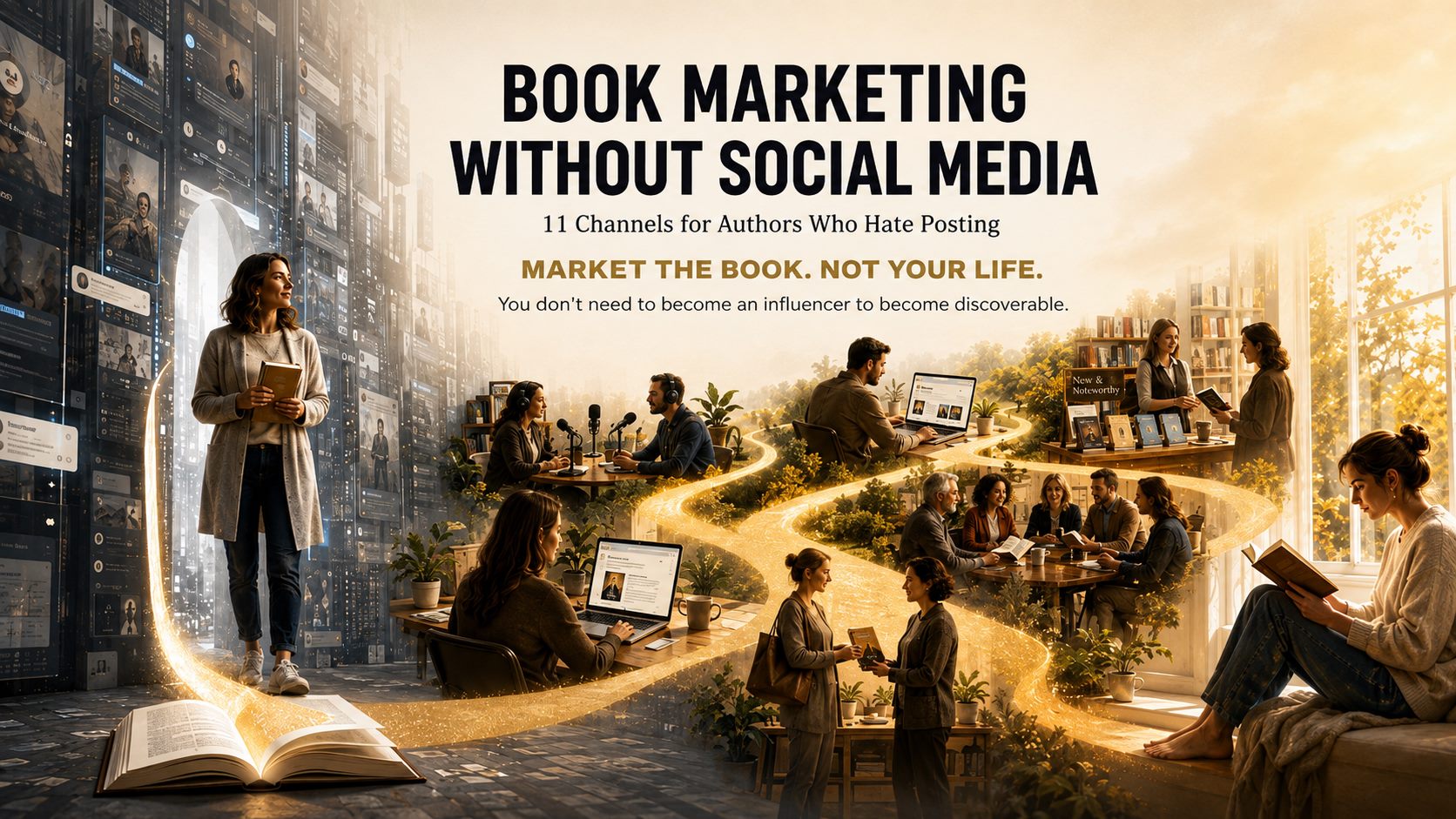
Book Marketing Without Social Media: 11 Channels for Authors Who Hate Posting
Your book does not need a daily Reel, a trending sound, or your face talking into a phone at 7:30 every morning to find readers.
If posting feels natural to you, social media can be useful. If it drains your energy, steals writing time, or turns every quiet moment into “content,” forcing it rarely makes for a good long-term marketing plan.
Book marketing without social media works when you replace constant posting with channels built around reader discovery, search intent, direct relationships, trusted recommendations, retail visibility, and repeatable promotion.
That is not a fringe opinion in 2026. The Authors Guild ran a dedicated March 2026 program on promoting books without social media, while Writer's Digest hosted a 2026 session with Jane Friedman specifically around the same problem.
The real question is no longer, “Can I market my book without social media?”
It is:
Which channels deserve my time instead?
Key Takeaways
You do not need all 11 channels. Two or three well-chosen channels can be more useful than maintaining five social accounts badly.
Start with places where people already discover, discuss, search for, or buy books.
Build at least one audience asset you control, especially an author website or email list.
Measure sales, subscribers, qualified traffic, enquiries, and repeat readers instead of chasing impressions.
Your genre, book economics, audience, backlist, personality, and goals should determine the marketing mix.
Can You Really Market a Book Without Social Media?
Yes. You can market a book without maintaining an active social-media presence by combining owned channels such as email and your website, borrowed audiences such as podcasts and media, retail discovery through Amazon, paid advertising, reader newsletters, libraries, bookstores, events, partnerships, and word of mouth.
Fresh reader data supports the idea that discovery is much broader than social feeds.
The Written Word Media 2026 Reader Survey found that respondents reported discovering books through Amazon at 68%, email newsletters at 64%, friends and family at 45%, social media at 42%, author websites at 30%, and libraries at 29%. The company correctly cautions that its respondents skew toward active digital readers already subscribed to its newsletters, so those numbers should not be treated as a census of every book buyer.
The useful lesson is simpler:
Readers do not live in one marketing channel. Neither should your book.
Stop Replacing Social-Media Burnout With Marketing Burnout
Dropping Instagram only to give yourself eleven new jobs misses the point.
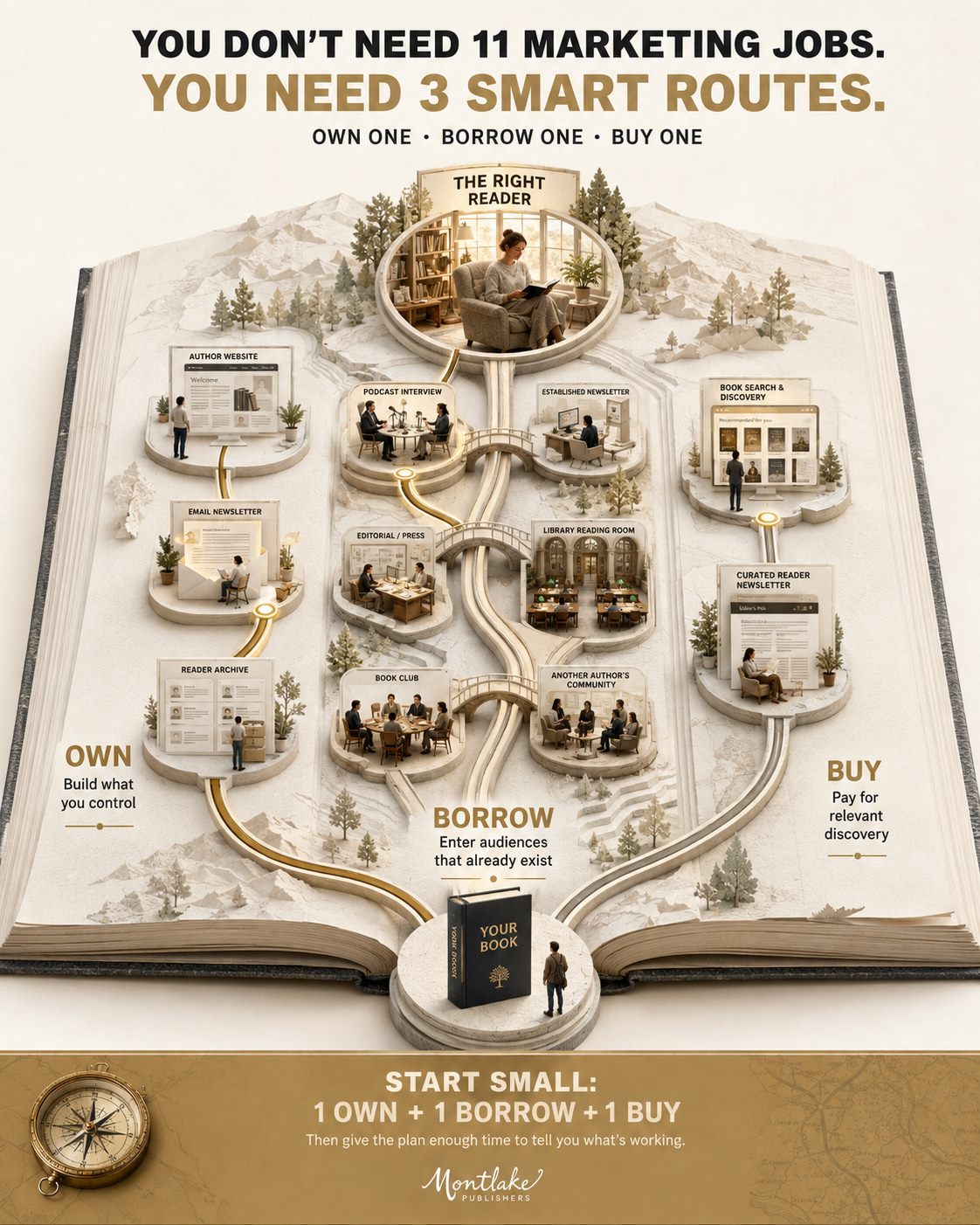
Use what I call the Three-Lane Book Marketing Stack:
1. Own
Channels and assets you control.
Examples:
email list
reader database
searchable content
2. Borrow
Audiences someone else has already built.
Examples:
podcasts
newsletters
book clubs
libraries
media outlets
other authors
3. Buy
Discovery you pay to access.
Examples:
Amazon Ads
BookBub
reader-promotion newsletters
selected advertising campaigns
A healthy plan might contain one strong channel from each lane.
That is far easier to manage than trying to “be everywhere.”
1. Make Your Author Website Your Marketing Headquarters
Social-media accounts are rented spaces.
Your website is where you decide what readers see next.
A strong author website should help a visitor answer five questions quickly:
Who is this author?
What books have they written?
Which book should I start with?
Where can I buy it?
How can I hear from this author again?
That means your website should do more than display a large headshot and an “About Me” paragraph.
Useful elements include:
dedicated pages for each book
retailer buttons
series reading order
newsletter signup
author biography
media kit
event information
downloadable book-club material
interviews and press coverage
searchable articles where appropriate
Written Word Media's 2026 reader survey found that 30% of its respondents reported author websites as a book-discovery source. Again, this is a specific active-reader sample, but it reinforces the value of an author-owned destination.
A podcast can introduce you.
An ad can attract the click.
A library event can create interest.
Your website gives that interest somewhere useful to land.
2. Build an Email List Before You Build Another Following
Email is boring right up until an algorithm stops showing your posts to people who supposedly follow you.
Then boring looks rather attractive.
Among Written Word Media's 2026 respondents, 64% named email newsletters as a common book-discovery source, compared with 42% for social media. The same survey found that 49% subscribed to author newsletters.
An author newsletter can support:
launch announcements
preorder reminders
bonus scenes
early chapters
reader recommendations
event invitations
research stories
cover reveals
sequel announcements
price promotions
reader surveys
But do not build an email list simply to send “buy my book” messages.
Give readers a reason to remain.
For fiction, that might be bonus stories, character material, recommendations, or early access.
For nonfiction, it could be commentary, practical advice, research, resources, or new thinking related to the book's subject.
The inbox should feel like a relationship.
Not a cash register.
3. Turn Your Amazon Presence Into a Better Sales Destination
Marketing does not end when someone clicks.
Sometimes that is where it begins.
Before driving more people toward Amazon, review what they will actually see:
cover
title and subtitle
book description
formats
series information
reviews
author profile
category fit
retail presentation
Amazon's official Author Central guidance says authors can create a dedicated Author Page containing current information about themselves and their books.
That page matters because readers frequently investigate before buying.
Even a strong marketing campaign can struggle if the cover signals the wrong genre or the product page does not make the book's promise clear.
That is why marketing often connects naturally with professional book cover design and careful book publishing support. Those are not promotional channels themselves. They help the traffic you earn arrive at a book that feels ready for attention. Montlake's current service pages position cover work around genre, audience, presentation, and publishing goals, while its publishing services address the broader release process.
4. Reach Readers While They Are Shopping With Amazon Ads
There is a useful difference between interrupting someone and appearing while they are already looking for something to read.
Amazon Sponsored Products can appear in shopping results and on book-detail pages, with advertisers paying when a shopper clicks. Amazon also allows authors to target relevant searches or products.
Recent data makes this channel particularly interesting.
Amazon's current frontlist guidance cites an April 2026 Amazon and Kantar books path-to-purchase study in which 81% of surveyed book buyers discovered a new author or title during their search, and 88% of that group went on to buy the book they discovered. The same source reports that 37% bought within one day of beginning their research.
That does not mean every Amazon ad will work.
Watch:
clicks
spend
orders
royalties
keyword performance
product targets
series read-through
profitability
Ten thousand impressions are not exciting if the campaign loses money.
5. Borrow Reader Attention Through Book-Promotion Newsletters
Someone else may already have the audience you are trying to build.
Book-promotion newsletters can put discounted or free books in front of subscribers who specifically signed up to discover books.
BookBub Featured Deals, for example, sends category-targeted recommendations to large reader lists. Its current pricing and statistics page says partners typically see click-to-purchase conversion rates around 20% to 30%, while clearly warning that actual performance varies by book, price, category, and timing.
That caveat matters.
A promotion should make economic sense for the book.
A 99-cent first novel in a six-book series has a different business case from discounting your only standalone title.
Before booking a promotion, ask:
What happens after this sale?
Is there another book to read?
Can this reader join my email list?
Is the discount supporting a launch, series, or backlist strategy?
Can I measure what happened?
Do not buy exposure simply because the audience number looks impressive.
6. Become the Guest, Not the Podcast Host
Starting a podcast is another job.
Appearing on one is marketing.
Podcast guesting is particularly strong for:
memoir authors
business authors
experts
historians
health and wellness writers
faith authors
investigative nonfiction
books connected to cultural or professional topics
Podcast consumption is also at record levels.
Edison Research's Infinite Dial 2026 reports that 58% of Americans age 12+ consumed a podcast during the previous month, while 45% had done so during the previous week.
But pitch the conversation, not the book.
Weak:
“I published a new memoir. Can I be on your show?”
Stronger:
“I spent three years researching how adult children handle a parent's dementia. Here are three surprising ideas your caregiving audience may find useful.”
The book establishes authority.
The conversation earns the invitation.
7. Use Publicity to Enter Conversations That Already Exist
Publicity works differently from advertising.
You do not buy the journalist's audience. You give the journalist a reason to care.
Useful angles may come from:
your professional expertise
original research
local relevance
an anniversary
a cultural conversation
a surprising personal experience
a timely issue
a historical event
your book's setting
a community connection
Veteran book publicist Marissa DeCuir put the mindset well in a May 2026 Writer's Digest piece:
“The real opportunities ... lie not in ‘can we,’ but instead asking ‘How can we do this?’”
That is a better publicity question.
Do not ask whether the media will announce that you wrote a book.
Ask what story, expertise, argument, experience, or timely perspective your book gives you permission to discuss.
8. Publish Searchable Ideas Outside Social Feeds
Not every online marketing activity is social media.
Useful search content can keep introducing people to your work long after publication day.
Depending on your book, that could include:
guest essays
expert articles
book-club resources
opinion pieces
interviews
educational resources
searchable blog posts
research summaries
reading lists
A nonfiction author writing about workplace burnout can publish genuinely useful articles about burnout.
A historical novelist can write about the real period, place, profession, or event behind the story.
A memoir writer may contribute thoughtful essays around the larger theme of the book.
This strategy works best when the article is useful without requiring someone to buy the book.
The book becomes the deeper next step, not the price of admission.
9. Work With Libraries and Book Clubs
Libraries remain part of book discovery.
Written Word Media's 2026 reader survey found that 29% of its respondents cited libraries, including services such as Libby and Hoopla as well as physical libraries, as discovery sources.
Opportunities can include:
local-author events
readings
workshops
library talks
book-club selections
community newsletters
collection consideration
virtual author Q&As
Book clubs deserve special attention because one organizer can introduce a title to an entire group.
Make their job easier.
Offer:
discussion questions
printable reading guides
author Q&A information
virtual visit availability
bulk-order information where appropriate
background notes
Think like the organizer.
“What would make choosing this book painless?”
That question will take you further than another promotional post.
10. Meet Readers Through Bookstores, Events, and Speaking
Sometimes the most effective marketing does not look like marketing.
It looks like being in the right room.
Relevant possibilities include:
independent bookstores
literary festivals
conferences
schools
professional associations
libraries
community organizations
workshops
trade events
museums
heritage groups
book fairs
The right opportunities depend heavily on the book.
A leadership author has a speaking product hidden inside the manuscript.
A children's author may have a school-visit program.
A local-history writer may have talks for libraries and historical organizations.
A romance novelist may find genre conventions more useful than a generic business conference.
Your book does not always need an event.
Sometimes its subject creates the event.
11. Build Recommendations Through Partnerships and Word of Mouth
Friends and family ranked above social media as a discovery source among respondents in Written Word Media's 2026 survey: 45% versus 42%.
Recommendation remains powerful because books are deeply personal purchases.
You can support that behavior through:
newsletter swaps
compatible-author recommendations
joint events
reading groups
partner organizations
referral-friendly links
book-club guides
back-of-book recommendations
reader bonuses
series read-through
The rule is simple:
Shared audience matters more than audience size.
An author with 2,000 highly relevant subscribers may be a better partner than someone with 100,000 people who do not read your genre.
Which Book Marketing Channels Should You Choose?
Use this decision table before adding anything to your calendar.
| Your Situation | Best Starting Mix | Why |
|---|---|---|
| First book, no audience | Amazon setup + Amazon Ads + podcasts | Lets you reach audiences that already exist |
| Fiction series | Email + reader newsletters + Amazon Ads | Supports repeat readership and read-through |
| Memoir | Podcasts + publicity + libraries/book clubs | Personal themes often work through conversation |
| Business/nonfiction | Website/search + email + guest media + speaking | Expertise creates several discovery routes |
| Children's book | Libraries/schools + events + email + local publicity | Strong community and educational fit |
| Author who hates public speaking | Website + email + Amazon Ads + reader newsletters | Less dependence on personal performance |
| Published book with weak visibility | Retail-page review + ads + partnerships + publicity | Fixes the destination before increasing traffic |
What Authors Often Get Wrong
They Choose Channels Before Defining the Reader
“People who like books” is not an audience.
A cozy-mystery reader, startup founder, grieving parent, fantasy fan, history enthusiast, and preschool teacher discover books differently.
Start there.
They Confuse Activity With Progress
Posting, emailing, pitching, advertising, and attending events can make you busy.
Busy is not a measurement.
Watch what each channel produces.
They Send Traffic to a Weak Book
Do this: Check the cover, positioning, product page, description, formats, and buying path first.
Not that: Pay for more traffic and hope visibility fixes a conversion problem.
They Try Everything for Two Weeks
Book marketing often rewards consistency.
The Authors Guild's June 2026 book-promotion programming specifically highlighted the need to think about marketing for months beyond launch rather than treating publication week as the entire campaign.
Give a sensible strategy enough time to produce information before abandoning it.
What Could This Look Like for a Real Book?
Picture a nonfiction author with a book about caring for an aging parent.
They hate social media.
Fine.
Their marketing stack could be:
Owned:A focused author website, email list, caregiver resource page, and discussion guide.
Borrowed:Caregiving podcasts, aging publications, local media, libraries, support organizations, book clubs, professional associations.
Paid:Carefully tested Amazon Ads and selected reader-newsletter campaigns.
No TikTok required.
No daily Instagram Story.
No pretending to enjoy something they dread.
More importantly, every channel connects with a reason someone might genuinely care about the book.
That is strategy.
Build Your No-Social Marketing Plan in Five Steps
1. Describe Your Best Reader
Write one paragraph about who is most likely to buy, finish, recommend, and buy another book from you.
2. Identify Where That Reader Already Discovers Books
Choose from Amazon, Google, email newsletters, podcasts, libraries, book clubs, media, stores, events, associations, and trusted recommendations.
3. Pick One Owned, One Borrowed, and One Paid Channel
Do not add another until you can explain why the first three are or are not working.
4. Fix the Destination
Review your cover, retail page, author page, website, description, buying links, and email signup.
5. Run the Plan for 90 Days and Keep Score
Track:
book sales
retailer clicks
qualified website visits
email subscribers
ad costs
media appearances
event invitations
reader enquiries
repeat purchases where measurable
Then cut what consumes time without producing useful movement.
Where Professional Book Marketing Support Fits
Knowing that podcasts, newsletters, advertising, publicity, websites, bookstores, libraries, and partnerships exist is not the hard part.
The hard part is deciding which ones fit this book.
Montlake Publishers currently describes its book marketing services around audience, genre, positioning, competitive research, outreach, promotional planning, and continued visibility.
If you prefer a strategy that does not depend on constant social posting, make that constraint part of the planning conversation from day one.
The wider publishing system matters too. Professional book cover design can strengthen first impressions, an author website gives campaigns a permanent destination, and book publishing support can help prepare the title before promotion begins. Montlake presents these services as connected parts of its wider author-support offering.
Marketing cannot rescue every problem upstream.
Sometimes the smartest marketing decision is fixing what happens after the click.
Final Thoughts
You do not need to become an influencer to become discoverable.
You need readers.
And readers can find books through search, Amazon, email, podcasts, recommendations, libraries, media, bookstores, events, partnerships, advertising, and conversations that have nothing to do with your follower count.
The best book marketing without social media is not anti-social-media.
It is anti-wasted-effort.
Choose channels that match your readers, your book, your economics, and the way you can realistically keep showing up.
Then do fewer things better.
That is a much stronger marketing plan than spending another year creating posts you secretly hope nobody asks you to make again.
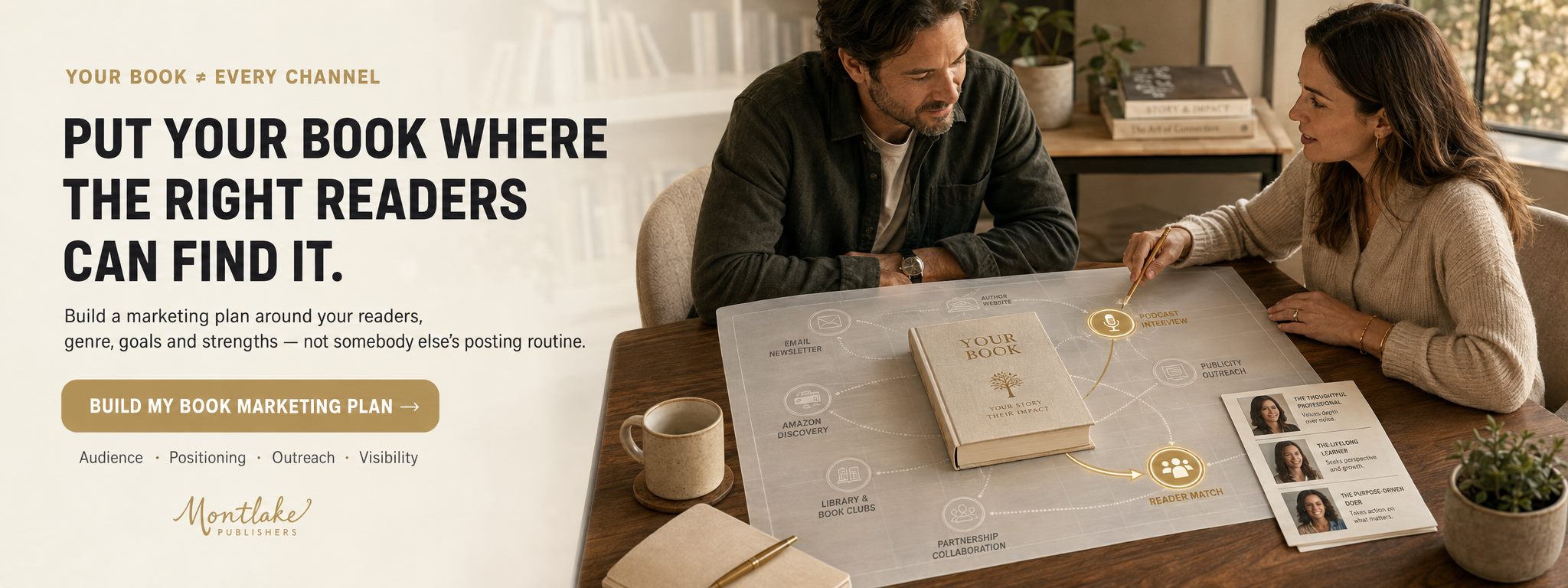
Put Your Book Where the Right Readers Can Find It
You have more options than “post every day or disappear.”
If you want help deciding which channels fit your genre, audience, publishing stage, and goals, explore Montlake Publishers' book marketing services or visit Montlake Publishers to review the wider author-support services available.
Frequently Asked Questions
Can you successfully sell books without social media?
Yes. Social media is one discovery route, not the entire book market. Authors can reach readers through email, Amazon, websites, paid advertising, podcasts, publicity, libraries, bookstores, events, reader newsletters, partnerships, and direct recommendations. Current 2026 publishing resources from the Authors Guild explicitly address this approach. (The Authors Guild)
What is the best alternative to social media for authors?
There is no single replacement because different books have different readers. Email is particularly valuable for long-term direct communication, while Amazon can reach active book shoppers and podcasts can connect authors with established niche audiences. Start with the channel closest to how your readers already discover books.
How can a first-time author market a book with no followers?
Borrow an audience instead of waiting to build one. Podcast appearances, reader newsletters, Amazon Ads, media outreach, libraries, book clubs, stores, professional organizations, and partnerships can introduce your book to people who have never heard of you.
Is email marketing still worth it for authors in 2026?
Yes, particularly when readers have actively chosen to subscribe. Written Word Media's 2026 survey found email newsletters were among the most commonly reported book-discovery channels in its active-reader sample. Authors should still offer useful content rather than sending constant sales messages. (Written Word Media)
Can Amazon Ads work if I have no author platform?
They can be tested without a large social following because Sponsored Products can appear while people search and browse for books on Amazon. Results depend on targeting, book presentation, pricing, competition, and campaign economics, so authors should monitor performance rather than assuming advertising will automatically produce profit. (Amazon Ads)
How do I promote a self-published book without spending much money?
Start with assets you can control: a clear Amazon page, Author Central profile, simple author website, email list, media pitch, podcast outreach, library relationships, book-club resources, and partnerships. Free does not mean effortless, so choose channels where your time has a realistic chance of reaching the right readers.
Are podcasts good for book promotion?
Podcasts can be a strong channel when the show's audience overlaps with the book's reader. Edison Research reported record U.S. podcast consumption in 2026, with 58% of Americans age 12+ consuming one in the previous month. Pitch an interesting conversation rather than asking hosts to advertise your book. (Edison Research at SSRS)
Can libraries help self-published authors find readers?
Yes, depending on the library, book availability, distribution, professional presentation, local relevance, and collection policies. Authors can also pursue talks, workshops, book clubs, local-author events, and reading programs rather than focusing only on getting a title onto a shelf.
Should I completely delete my social-media accounts?
Not necessarily. If social media gives you useful connections or readers without consuming too much time, keep what works. The point is that you do not need to make daily social posting the foundation of your book-marketing strategy.
Can Montlake Publishers help build a marketing strategy that does not depend on constant posting?
Montlake Publishers offers book marketing services covering audience research, positioning, competitive review, outreach, campaigns, and ongoing book visibility. Authors who want less dependence on social posting should state that preference during planning so the proposed strategy can be discussed around other relevant channels.


